Week 1: Getting the Lay of the Land & Librarians as Faculty

Tuesday. 17 May 2016

My first day at Butler University began with, appropriately, a library faculty meeting. I found the primary business of the meeting particularly relevant (and useful!) to my interests and future career.

The Butler Library faculty convened to discuss the language to be included in the Librarian position description competencies. The assistant dean of the libraries distributed and asked for comment from library faculty on the language to be used when describing required competencies for future library positions. The competencies were based on examples provided in The Expert Librarian, Chapter 6: “Preparing Librarians for the Future, Identifying and Assessing Core Competencies at the University of Minnesota Libraries,” pages 139-149.

I found the discussion of the core competencies particularly useful and enlightening. As the assistant dean made clear, this description of competencies truly reflects who the Butler librarians are and what they value as librarians. Much of the discussion centered on the “philosophical” nature of the competencies and how these competencies could best be assessed in potential job candidates.

Having no role in the meeting allowed me to listen and get a sense of the “worldview” of the Butler library faculty. I also had the opportunity to get a sense of the how the various individuals at the meeting interacted with one another–as a way to better understand the political and power dynamics of the organization.


Towards Mastering Library Science…

This blog has been created in partial fulfillment of the requirements for the Master of Library Science from Indiana University, Bloomington. I am acting as an intern at Butler University, Irwin Library under the direction of Special Collections Librarian and Archivist, Sally Childs-Helton during the summer of 2016.

Adventurous Women: Select Bibliography

Our Land, Our Literature: Literature – Mary H. Krout (Our Land, Our Literature: Literature – Mary H. Krout)
http://landandlit.iweb.bsu.edu/Literature/Authors/kroutmh.html

Banta, R. E., ed. “Mary H. Krout.” Indiana Authors and Their Books, 1816-1916; Biographical Sketches of Authors Who Published during the First Century of Indiana Statehood, with Lists of Their Books. Crawfordsville, IN: Wabash College, 1949.

Cuthbertson, Ken. Nobody Said Not to Go: the Life, Loves and Adventures of Emily Hahn.  Boston: Faber & Faber, 1998.
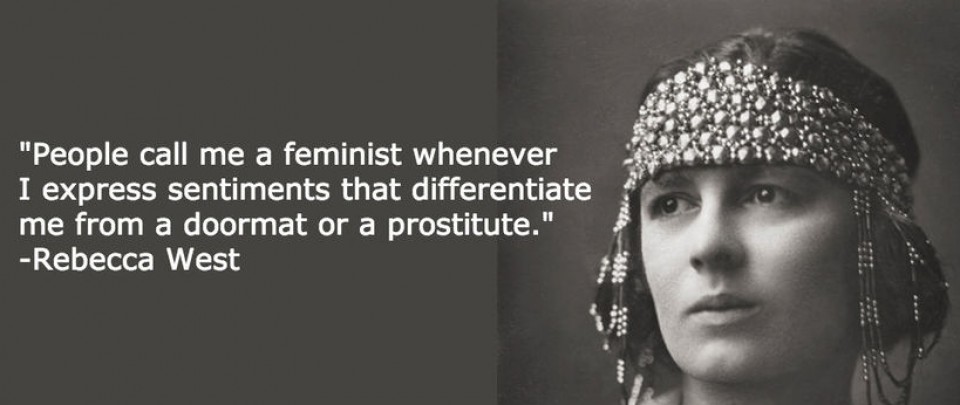
Gibb, Lorna, West’s World: The Extraordinary Life of Dame Rebecca West. 2013.

Glendinning, Victoria. Rebecca West: A Life. 1st Ballantine Books ed. New York: Ballantine, 1988.

Hahn, Emily. Love, Mickey: Letters to Family from Emily Hahn. Bloomington, IN: Lilly Library, Indiana University, 2005.

Hahn, Emily. No hurry to get home : the memoir of the New Yorker writer whose unconventional life and adventures spanned the twentieth century. Foreword by Sheila McGrath ; introduction by Ken Cuthbertson.  Seattle : Seal Press : Distributed to the trade by Publishers Group West, 2000.

Orel, Harold, The Literary Achievement of Rebecca West. Basingstoke: Macmillan, 1986.

Packer, Joan Garrett, Rebecca West: An Annotated Bibliography. New York: Garland Pub., 1991.

Russo, Dorothy R., and Thelma Lois Sullivan. Bibliographical Studies of Seven Authors of Crawfordsville, Indiana: Lew and Susan Wallace, Maurice and Will Thompson, Mary Hannah and Caroline Virginia Krout, and Meredith Nicholson. Indianapolis: Indiana Historical Society, 1952.

Wasserstrom, Jeffrey. 2006. “Searching for Emily Hahn on the Streets of St. Louis”. History Workshop Journal, no. 61. Oxford University Press: 214–21. http://www.jstor.org/stable/25472847.

Paleography: Learning to Read Old Handwriting

One of the most difficult aspects of Ph.D. training for those studying the pre-modern world must be Paleography–the study of old handwriting. Never will I forget dutifully taking the only paleography course available to me at Arizona State University: a “video” course. This consisted of a series of video-taped lectures (of fairly awful quality) by some very good and well-meaning scholars who attempted to teach students about a VERY wide variety of pre-modern handwriting styles. I gained very little in the way of practical information. I managed to pass this one unit course feeling very dissatisfied.

Feeling worried and wary, I managed to obtain a copy of the now out-of-print: English Handwriting, 1400-1650 : An Introductory Manual by Preston & Yeandle. This was a god-send that I took with me on my first major research trip to London. Optimistically entering the British Library in October 2001, I thought I could easily read the many manuscript sources that I would discover at the BL Instead, I spent the first week flailing about unable to read ANYTHING placed in front of me. I found myself in the office of the curator crying and terrified that it would take my entire time in London to be able to read Secretary hand.

The kind curator refrained from laughing in my face and merely encouraged me to slog along and that eventually, I would be able to read the manuscripts. She was right, but without Yeandle, I doubt I would have accomplished as much as I did.

That experience taught me that one must continually practice paleography. Otherwise, each time you approach these sources you will nearly have to start over and get the “hang of it” all over again. I dreamed that  I would find some online course or source for practicing paleography. Fortunately, such online resources now exist and these are the subject of this post.

The first site to come up with something useful was the Scriptorium:
Medieval and Early Modern Manuscripts Online
. This online paleography course comes to us from Cambridge University. It is a good start for learning and practicing the paleography skills that English historians of the pre-modern world need. The course provides 28 lessons that take the student through increasingly difficult manuscripts and hands. The students can practice their own transcription of very good sources. The feedback is immediate and one can “test” oneself as well.

The site is rather dated and clumsy–there is a lot of clicking back and forth around the site to get through a lesson. Still, as an early resource, it is remarkable. The hands-on experience of transcription and feedback is invaluable. You can filter the lessons by the dates of the manuscripts to help you get experience with documents from your particular time-period. You can also work your way through from easier to more difficult manuscripts (some people have VERY bad handwriting in the past, just as they do today!)

The site contains historical information about the history of handwriting, further reading, transcription conventions and more. This is a good course. Graduate students will benefit enormously from working through the course–especially if they do not have access to a paleography course in their graduate program.

Another, and probably better, online paleography course may be found at http://www.nationalarchives.gov.uk/palaeography/ This course comes from the British National Archives and capitalizes on the Cambridge success and makes a much bigger impact. As the site tells you about the interactive tutorial: “Each document is offered alongside: an historical background;a glossary; notes on the palaeography; a sample alphabet taken from each document and a full transcript.”

This is a gold mine of information and a very useable paleography course. The course provides all of these things for each document as well as a printable version of the document and a pop-up version. The interactive exercise is easy to use and allows you to zoom into the document image to get a good look while transcribing. Again, the feedback is immediate and you can work line by line.

The site also offers a fun game, “The Ducking Stool” that requires the player to correctly transcribe words to raise the victim from the water. My first attempt saw the poor woman submerged entirely. Further practice examples are provided with the admonishment to continue practicing–and I will!

Cognitive Diversity: One brain teaching many…

Tags

,

Lectures, discussions, essays, quizzes, midterm, final. These are the tools of the trade for most college professors. Used in various combinations, college students navigate their way through most college history courses. However, the question arises: do the students learn this way? Plenty of current research makes clear that each human learns best in different ways. Some learn best through lecture, others through visual means and so forth. Many of our colleagues today recognize this diversity and, to a lesser or greater extent, craft their coursework to accommodate student needs.

Having participated in the University of Nebraska, Lincoln’s Peer Review of Teaching Program, I have grappled with the problems of whether I am teaching what I assess for, or assessing what I actually teach, and whether my students are learning anything at all! I have had some success in refining my courses to better serve my students based on the way they learn, but another question arises: How does the way I learn and think impact the way I create my course AND assess my students?

I found an online pedagogy workshop at Brown University’s Sheridan Center for Teaching and Learning very useful and enlightening. The short “quiz” that starts the Teaching to Variation in Learning Workshop assesses your own cognitive preferences and offers insights based on your answers to a short set of questions/activities. These insights highlight ways in which your own learning style and preferences might impact how you design your courses, assess student work, and evaluate success.

Essentially, the tools this workshop provides serve to illustrate something we all probably know at some level: how we approach learning ourselves often determines how we gauge our students’ success. If a student shares our cognitive characteristics, then they will usually thrive. Those who do not, might not—unless we build into our courses the means for ameliorating the situation.

Frankly, the little quiz nailed my learning style and preferences on the head and made me realize that though I have come a long way from the first courses I taught, I have some work to do. First off, I think I will use this cognitive assessment on my own students. I teach face to face courses, but also online and I would like to have some real data to tell me each semester how students learn. Once I have a few courses worth of information, I will consider how what I currently do in my courses matches up with how my students learn. It may be that I must in some ways step out of my own comfort zone as an instructor to better serve my students. I will let you know how that goes!